
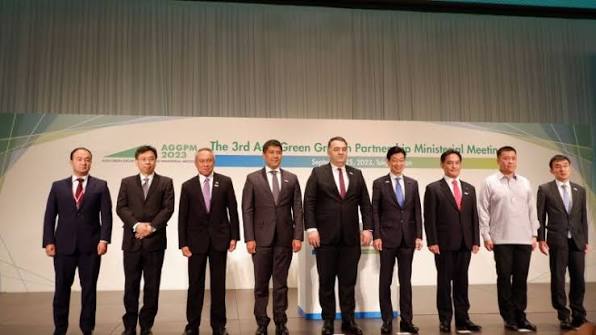
Our Honest Experience With the Green Growth Partnership Asia
When our team first engaged with the Green Growth Partnership Asia, we were skeptical. The sustainability sector is full of well-intentioned frameworks that struggle with on-the-ground implementation. As a Canadian organization looking to make a tangible impact in Asia, we needed more than just principles; we needed a conduit to real projects and partners. What we discovered through our involvement didn’t just meet a benchmark—it fundamentally reshaped our approach to collaborative, cross-Pacific green growth.
Why We Chose This Green Growth Partnership
Our search for a partner was exhaustive. We sifted through numerous initiatives before committing. The decisive factor was the Green Growth Partnership Asia’s laser focus on translating policy into action. We were particularly drawn to its hands-on work with regional bodies, such as supporting the Mekong River Commission’s sustainable hydropower guidelines. This wasn’t abstract theory; it was about influencing critical infrastructure in a sensitive ecosystem. Furthermore, its objectives directly echoed Canada’s own commitment to the Asia-Pacific Economic Cooperation (APEC) green goals, creating a natural alignment for our federally-supported projects.
Aligning with Our Core Values
Our organization is built on the belief that economic development and environmental stewardship must go hand-in-hand. This partnership’s multi-stakeholder model, which brings together governments, the private sector, and civil society, mirrored our own collaborative ethos. It wasn’t about imposing solutions, but co-creating them—a value deeply ingrained in Canadian approaches to international development.
The Specific Asian Market Gap It Filled
We found that many networks offered either high-level policy dialogue or isolated, small-scale projects. The gap was a platform that connected strategic frameworks with technical implementation and finance. This partnership acted as that crucial bridge, offering a trusted entry point to complex markets across Southeast and East Asia, which can be daunting for external organizations to navigate alone.
A Deep Dive into the Partnership’s Framework and Offerings
Beyond the mission statement, the practical structure of the partnership is where its value became clear. Membership granted us more than a logo on our website; it provided a structured platform for engagement.
The Core Methodology
The partnership operates on a hub-and-spoke model, connecting members to a curated network of technical experts and regional bodies. A cornerstone of this is access to Asian Development Bank (ADB) technical expertise for project design and feasibility studies. Their methodology revolves around three pillars: policy advisory, capacity building, and facilitating green investments, which provided a comprehensive checklist for our own project planning.
Unexpected Resources We Utilized
We anticipated the network, but some tools were a surprise and became invaluable. One was their green finance mapping database, which helped us identify blended finance opportunities. Another was their regular “deep-dive” workshops on niche topics, like circular economy models for SMEs in ASEAN, which connected us directly with policymakers and local entrepreneurs we would have struggled to engage independently.
Evaluating the Cost and Value for Our Projects
Let’s address the primary keyword directly: the Green Growth Partnership Asia price is a significant line item. It’s an investment. However, our analysis shifted from cost to value when we factored in the non-financial returns and leveraged funding it unlocked.
Breaking Down the Investment
The financial commitment is structured as an annual membership fee, scaled based on organization type and size. For us, it was a five-figure sum. This grants access to all resources, meetings, and the right to use the partnership’s convening power for our own project outreach.
Where We Found the Real Value
The real ROI materialized in two key areas:
- Risk Mitigation: The partnership’s guidance helped us navigate complex local environmental regulations, avoiding costly delays and compliance issues.
- Funding Leverage: Using the partnership’s credibility and matchmaking, we successfully secured additional project co-financing from FinDev Canada (Canada’s development finance institution). This alone covered our membership costs multiple times over.
The Tangible Results and Impact We Observed
This is where skepticism turned into advocacy. We moved from reports to real-world change.
Project Successes in Specific Regions
In Vietnam, we participated in a pilot project for sustainable rice cultivation in the Mekong Delta. The partnership connected us with local agri-tech firms and provincial authorities. We saw farmers adopt water-saving techniques and nutrient management plans firsthand, leading to a documented 15% reduction in water use and increased yield stability for participating farms.
Measurable Outcomes for Our Team
Internally, the benefits were just as clear. Our team’s capability grew substantially. We developed a robust pipeline of viable projects across three countries. Furthermore, we were able to provide concrete, field-tested case studies to our academic partners, including the University of British Columbia’s sustainability institute, enriching Canadian research with on-the-ground Asian perspectives.
Our Critical Review: The Strengths and Shortcomings
Any honest Green Growth Partnership Asia reviews must be balanced. Our experience was largely positive, but not without its friction points.
What Surpassed Our Expectations
The depth and responsiveness of the network were exceptional. When we needed a specific environmental assessment expert for a project in Indonesia, the partnership team had three qualified contacts for us within a week. The quality of the curated knowledge products and policy briefs was also far above the industry standard.
Areas Where We Faced Challenges
The primary challenge was pace. Decision-making and project implementation can be slow, bogged down by the need for consensus across multiple countries and stakeholders. This is a common challenge in multinational frameworks—one that even Canadian international initiatives sometimes face. It requires patience and proactive project management from members.
Final Verdict: Is It the Best Green Growth Partnership for You?
So, is it the best green growth partnership Asia has to offer? The answer isn’t universal; it’s contingent on your goals and resources.
Who Should Consider It
This partnership is ideal for Canadian organizations—be they NGOs, consultancies, or businesses—that are serious about deep, sustained engagement in Asia’s green sector. It is particularly valuable for those lacking an established local network and who need credible, pre-vetted connections. It pairs well with complementary local expertise, perhaps from a Canadian firm like Toronto-based Ivey Business School’s Asia-focused executive programs.
Our Final Recommendation
We recommend it, but with clear eyes. It is not a quick fix or a simple directory. It is a platform for those willing to invest time and resources to build something substantial. If you are looking for a transactional “buy-in” to green growth, look elsewhere. But if you seek a collaborative partner to build meaningful, lasting projects, it is among the most effective vehicles we’ve encountered.
FAQ
How does the partnership specifically help Canadian organizations?
It provides a trusted platform that aligns with Canada’s international priorities, like the APEC green goals, and offers direct pathways to co-financing opportunities with partners like FinDev Canada, while mitigating the common risks of entering Asian sustainability markets.
Is the partnership focused only on environmental projects?
No, its core philosophy is green *growth*, meaning it actively works at the intersection of economy and environment. Projects often focus on sustainable agriculture, clean energy, circular economy, and green infrastructure—all designed to deliver both ecological and economic benefits.
What is the typical timeline to see a return on investment?
Don’t expect immediate returns. It typically takes 12-18 months of active participation—attending meetings, leveraging the network, and developing project proposals—to build the relationships and credibility needed to unlock significant value and funding.
Can small businesses or startups participate, or is it only for large entities?
Yes, smaller organizations can participate. The partnership has tiered membership fees, and the diverse network can be especially valuable for startups offering innovative green tech or services, providing them with scale and credibility they lack independently.
How does it compare to working with a traditional management consultancy?
Consultancies sell you their internal expertise and a report. The partnership sells you access to an entire ecosystem and empowers you to build your own long-term capability and network. It’s a foundational investment in your organization’s own Asia competency, rather than a one-time service.
Ultimately, our journey with the Green Growth Partnership Asia reinforced a truth we hold dear: effective sustainability work requires both bold, overarching frameworks and the pragmatic, collaborative spirit that Canada is known for on the world stage. This partnership provided the former and facilitated the latter, making our foray into Asian green growth not just possible, but genuinely impactful.